
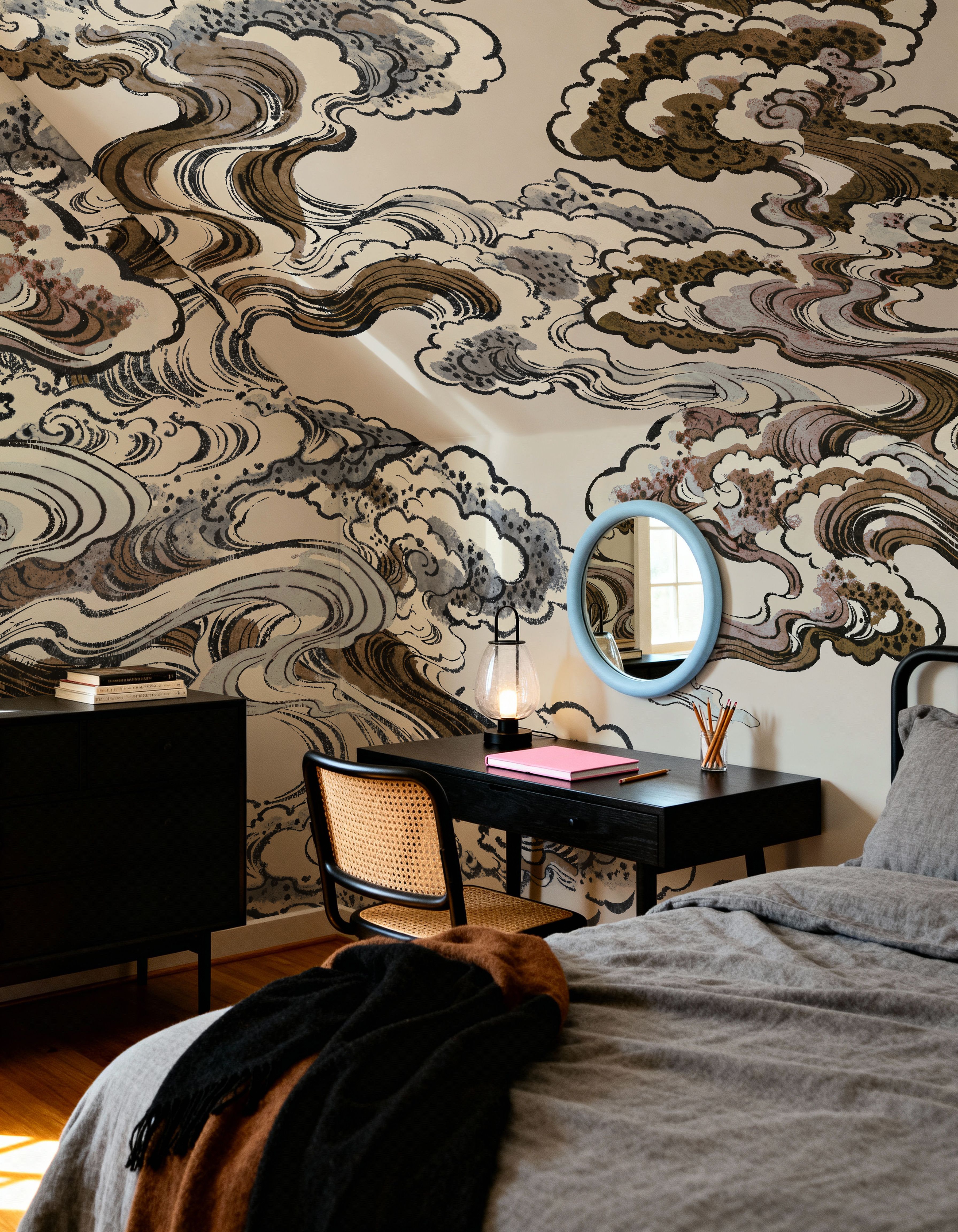
In a room with a sloped ceiling, an end wall may offer plenty of height in the middle and less room at the sides. The low wall beneath the slope has very different proportions. First, choose which surface should carry the design. It becomes easier to see whether a landscape, a freer image, or a repeating pattern belongs there.
Start with the difference between a wall and a ceiling
A vertical wall with a sloping upper edge is still a wall. A surface that slopes inward over the room is part of the ceiling. The difference affects both how you'll see the image and how the wallpaper needs to be installed.
An end wall can give a mural its clearest place in the room. Look at the area that will remain visible once the bed, dresser, or sofa is there. The wall's highest point is useful for the design only if you can see it.
On a low wall, a repeating pattern can leave more details visible even when furniture covers a lot of the surface. For a mural, check which details fit within the long, low crop.
Give the landscape room beneath the slope
Historic Lands, Forest Green is one of our most ordered woodland designs. The trees and the opening between them give the end wall a continuous scene. We'd start by placing the opening where the wall has enough clear space.
Then check the treetops against the ceiling's slope. When the sloping edge removes part of the image, a tree near the side may have less room than it does in the product photo. That can still work well, but choose the composition with that crop in mind.
A freer design offers another approach. Soft Abstract Beige has soft transitions between beige, cream, and pink. It's an option when you'd rather distribute colors across the irregular surface than give a specific landscape its own place.