When Peel & Stick is the right choice
Peel & Stick suits a wall you expect to change. That might be a rented apartment, a child's room that will look different in five years or a corner you have not quite decided on. If you rent and are unsure what you are allowed to do, ask your landlord before you order.
How popular it is depends a lot on the country. Over the past two years, about one in five of our orders from the US included Peel & Stick, compared with around one in ten in the UK and one in sixteen in France.
It is also the simpler project. You need no paste, bucket or roller, only a sharp knife, a straight edge, a level and a smoother. You peel the backing away about 25 cm at a time rather than all at once, and if a strip lands slightly wrong, you can carefully loosen it and set it again.
It does come with conditions. The wall has to be smooth, because the adhesive will not hold properly on orange peel, knockdown or other textured finishes. The paint has to be fully cured, which can take four to six weeks after painting depending on the type of paint, so check the can. And the room should not swing between dry and humid, which rules out bathrooms. Peel & Stick is not made for ceilings either.
Installed properly, it lasts at least five years. It is designed to come down again, but taking it down and putting it back up more than once shortens its life.
Samples come without the self-adhesive backing, so they show the color and the print but cannot tell you how Peel & Stick will hold. Checking the wall itself tells you more.
When paste-the-wall is the better choice
Paste-the-wall sounds like more work than it is. The paste goes on the wall rather than on the paper, so you hang each dry strip straight onto the pasted area and can slide it slightly sideways to line up the edge with the one before. On top of the Peel & Stick tools, you need paste made for non-woven wallpaper, a brush or roller and a bucket with a sponge.
Roughly six in seven of our orders over the past year were for Premium or Premium Textured. Choose one of them in these situations.
A lightly textured wall. Our paste-the-wall papers adhere to textured surfaces, although a smoother wall still gives a better finish. The design matters here too. A white or very pale background shows bumps more clearly than a darker or busier design. Popcorn texture is the exception, because its sharp points can show through and even tear the paper when you smooth it.
A bathroom or a kitchen. Premium and Premium Textured can be used in a well-ventilated bathroom or on a kitchen wall that stays mostly dry. Keep them out of the shower and away from the wall directly behind a sink or stovetop, where water and splashes reach the paper.
A wall that should last. For permanent installations and busy spaces with more wear, such as a shop or a hallway in an office, we recommend paste-the-wall over Peel & Stick.
Premium or Premium Textured?
Once you have chosen paste, the remaining decision is the surface. Premium is smooth and matte. Premium Textured has a slightly textured matte surface on a slightly heavier paper. Around four in ten of our orders over the past year were for Premium Textured.
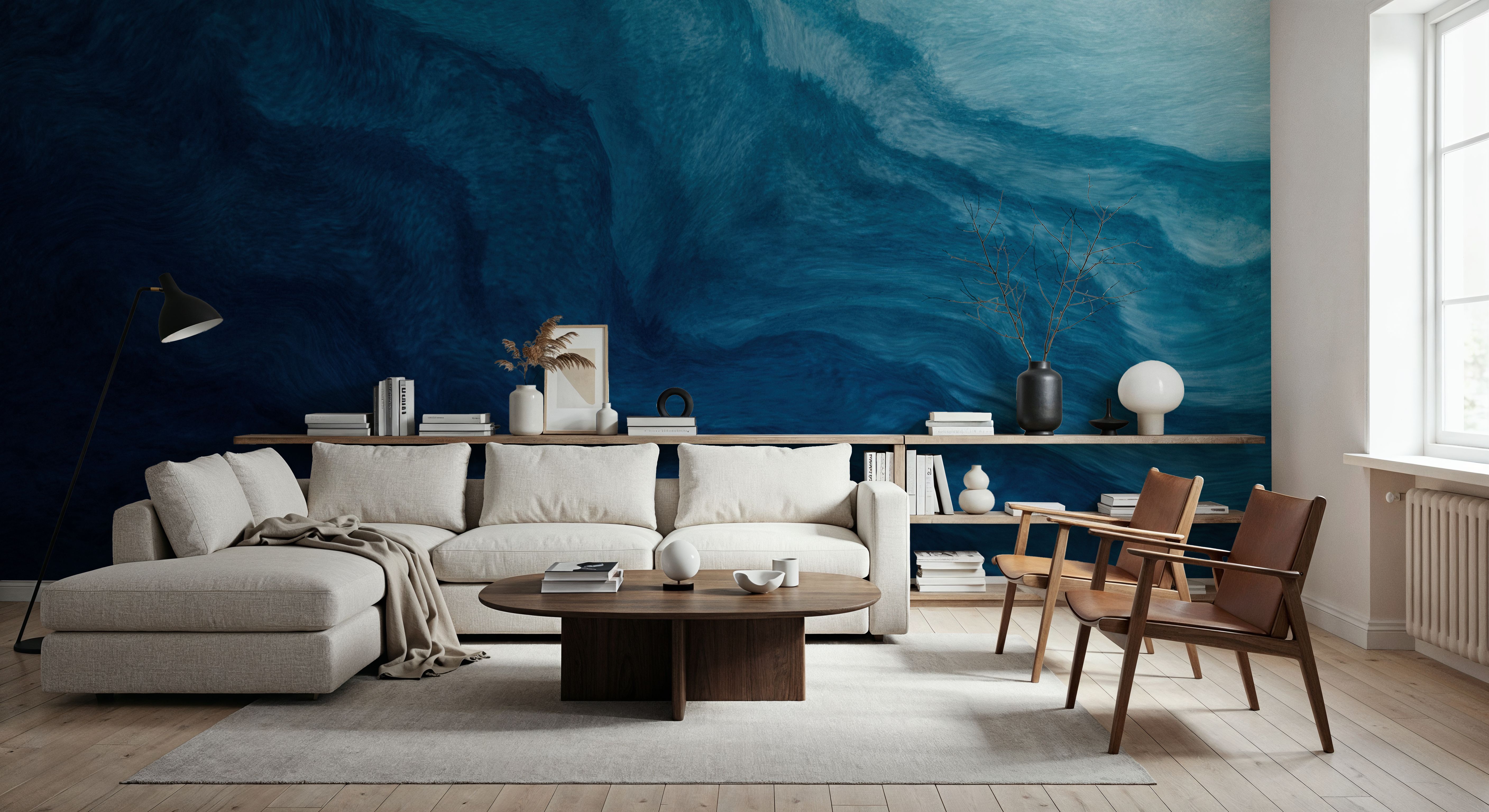
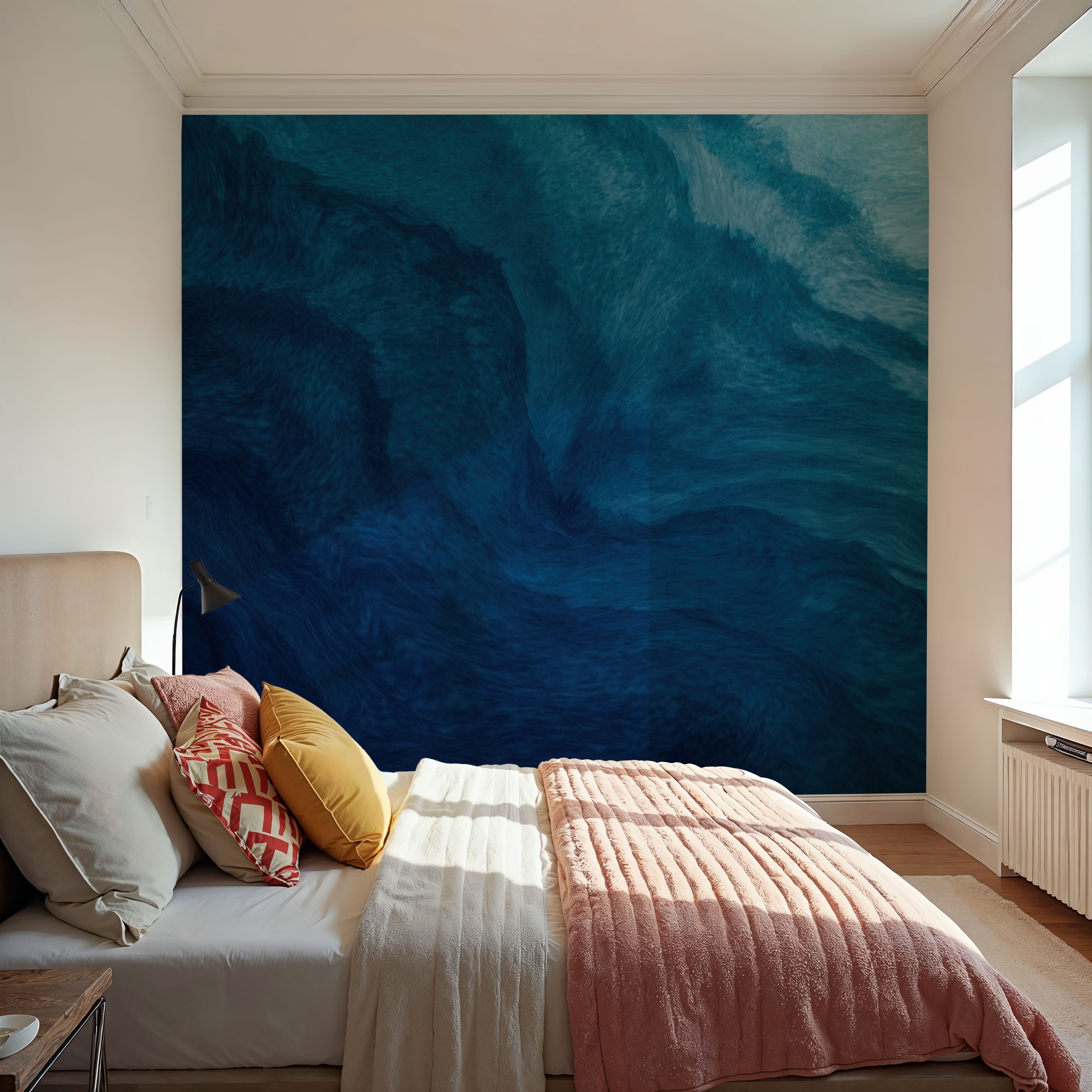
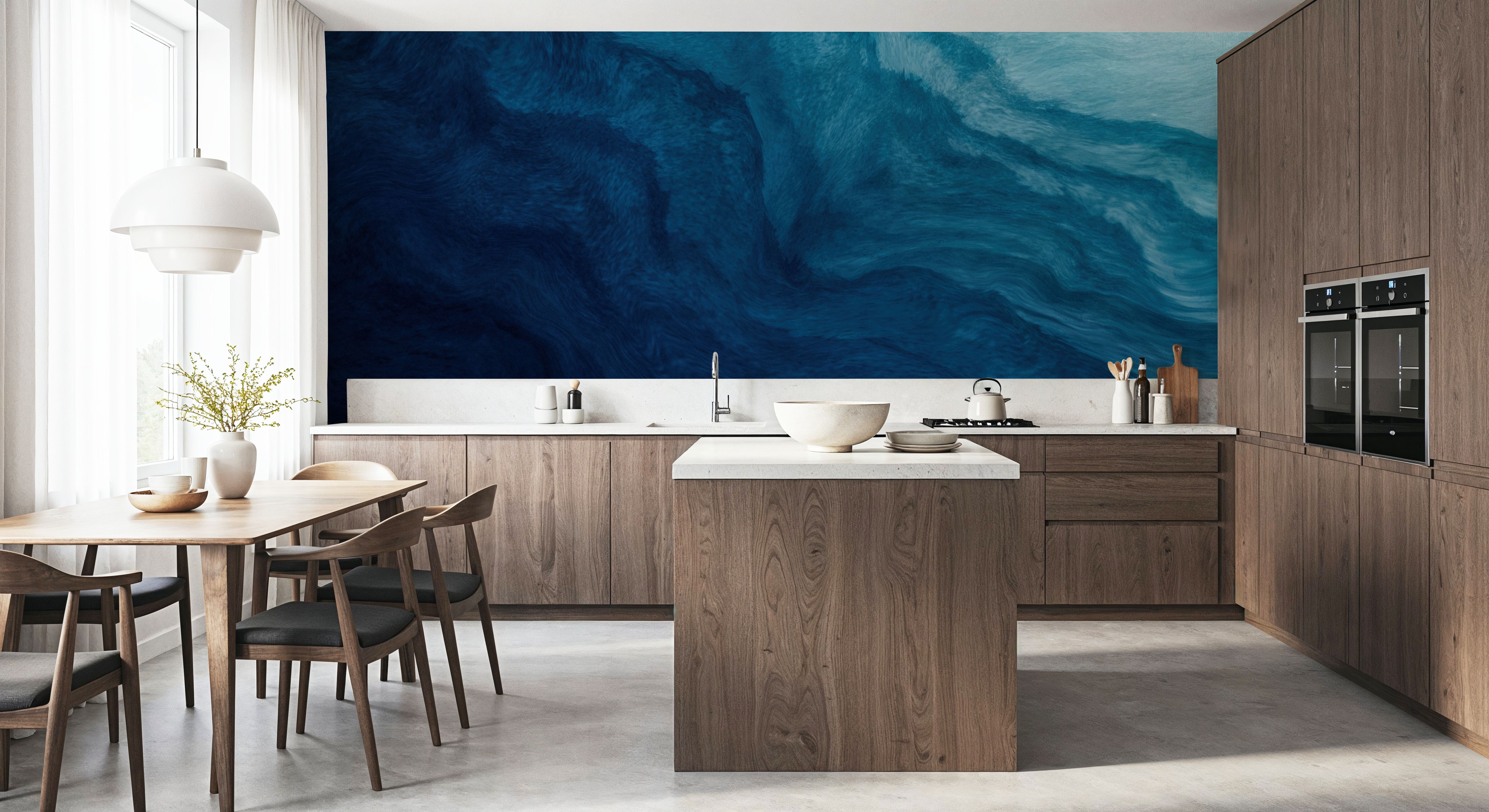
In our view, texture suits designs where you would expect to see a surface. Painterly brushwork, plaster and stone effects are good examples. On Layered Blues, where the brushstrokes themselves are part of the picture, a textured surface adds to the feeling of paint on a wall. A crisp graphic line or a photographic image can look cleaner on the smooth Premium.
The product page shows the price of all three papers for your exact wall once you enter the measurements.
Check the wall before you choose
Most of this decision depends on the surface, so look at it closely. In the evening, hold a flashlight flat against the wall and shine it sideways along the plaster. Bumps and ridges cast small shadows that you will not see in daylight.
If the shadows show texture, choose paste. If the wall is smooth, the paint has had a few weeks to cure and the room stays dry, Peel & Stick is a good fit.
Common questions