Wallpaper in a newly built home: adding character to plain rooms

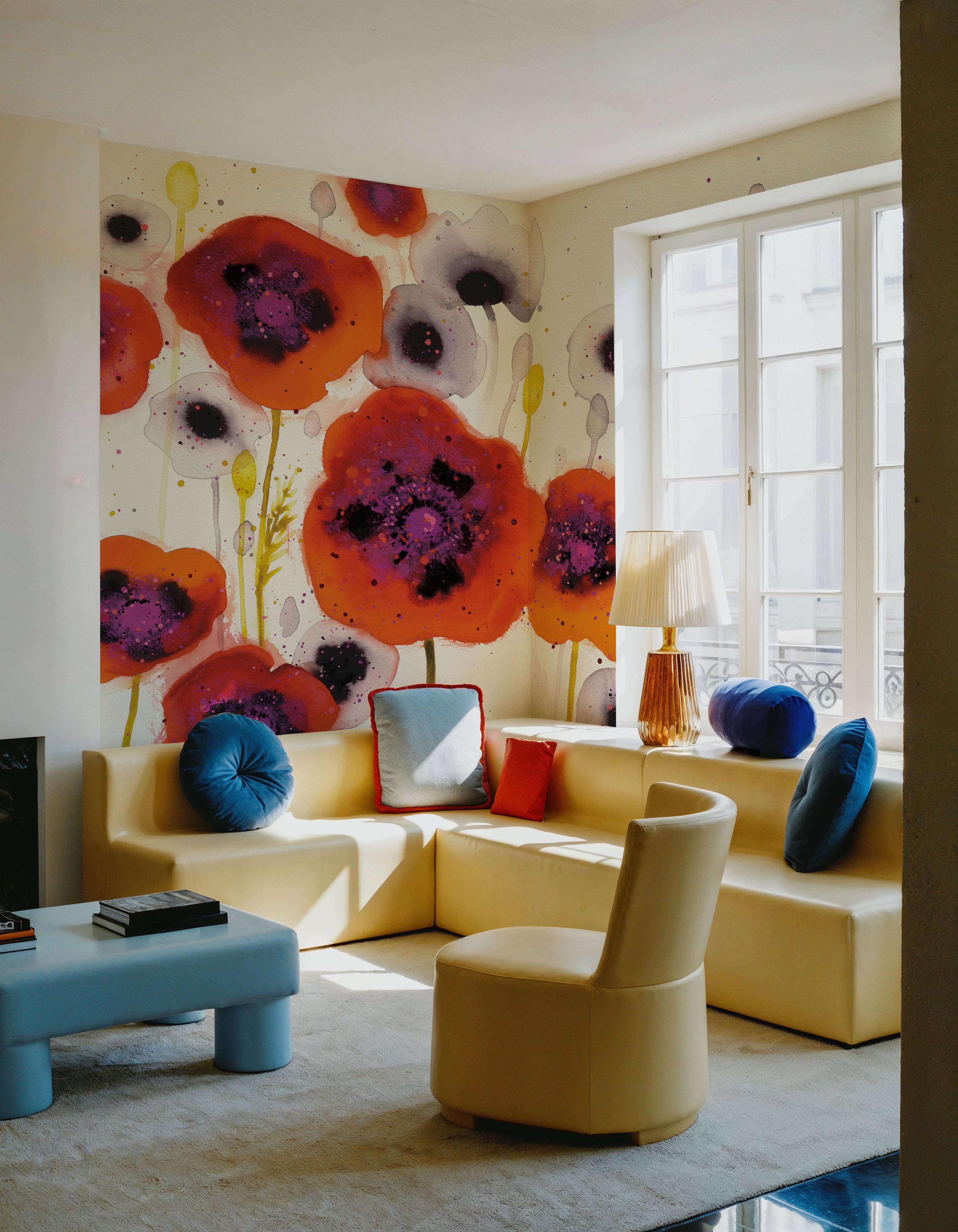
Splash Garden I in a plain, contemporary living room

The floor is new, the kitchen works and the walls have a fresh coat of white. You may like all of that and still feel the room could belong to anyone. Wallpaper gives you a way to make a clear choice about its character without replacing the fittings you have just paid for.

Before choosing a design, decide what you are missing. Is it colour, a drawing you enjoy or a sense of detail beyond the standard finishes? Each suggests a different starting point.

A painted design adds marks the plain surfaces lack

New rooms often contain large, even surfaces: cabinet doors, plastered walls and simple flooring. A painted wallpaper brings a different kind of detail beside them, with visible changes in the artist's brushwork.

Silvia Vassileva's Colorful Garden I has loose flowers in several colours. The painted treatment is part of what makes it worth looking at closely. It gives you more to choose from than a single accent colour on an otherwise white wall.

Use it where you will enjoy that artwork regularly, such as beside the dining table. Start with one colour from the design when choosing any new fabric or small furnishing. If you already have a chair you love, look for a connection with that instead. The room can develop around something specific you own, rather than a new matching set.
The room can develop around something specific you own, rather than a new matching set. Fredrik Hallengren
A graphic repeat gives simple architecture a visible pattern

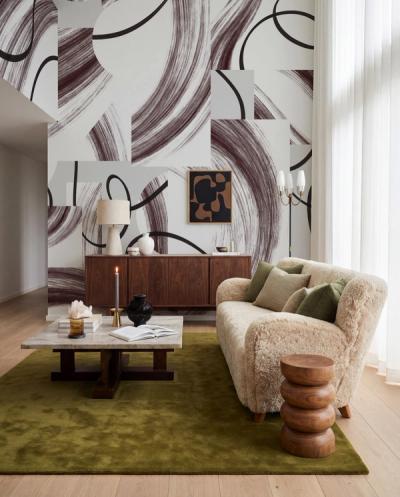
If you prefer limited colour, let the drawing add the interest. Deco Buds has fine black outlines against ivory. Its stylized leaf and petal shapes create a repeat you can follow across the wall.

The pattern works as a distinct layer beside plain doors and straight cabinet fronts. Black details already in the room, such as window frames or light fittings, can connect with the drawing. You do not need to add decorative moulding to give those surfaces something more detailed alongside them.

Look at the ivory ground beside the existing paint. If the two pale colours are noticeably different, consider whether the white paint still gives you the effect you want. A small change to neighbouring paint may make more sense than hunting for a wallpaper that matches every standard finish exactly.

A traditional landscape can belong in a new home

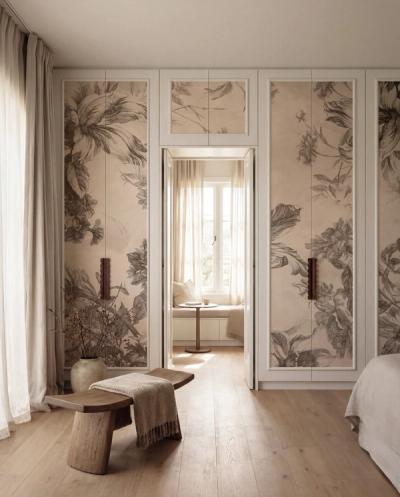
You can enjoy a historical style of illustration without trying to make the building look old. Historic Lands, Sepia offers a detailed woodland in warm brown and cream tones.

That landscape introduces a subject with its own depth and drawing. A simple table or a contemporary sofa can sit comfortably beside it because the room does not have to repeat the period suggested by the artwork.

Keep the finishes you like. Let the landscape be the detailed part of the room, then compare its browns with the wood already present. Adding imitation period features is only worthwhile if you wanted those features independently.

Make the first room specific before doing the whole home

Choose a room you use often and finish that decision first. It gives you a real combination of wallpaper, flooring, lighting and furniture to judge, instead of several imagined schemes competing at once.

Leave some of the new home's plain surfaces in view. Beside a design with paint, line or landscape detail, they have a useful role. You may find that one considered wall supplies the character you wanted, with the rest of the room already doing its job.